How our noise contours have varied

Over the last 20 years, the aviation industry has seen substantial improvements in aircraft design, engine technology and operational procedures. โ€‹

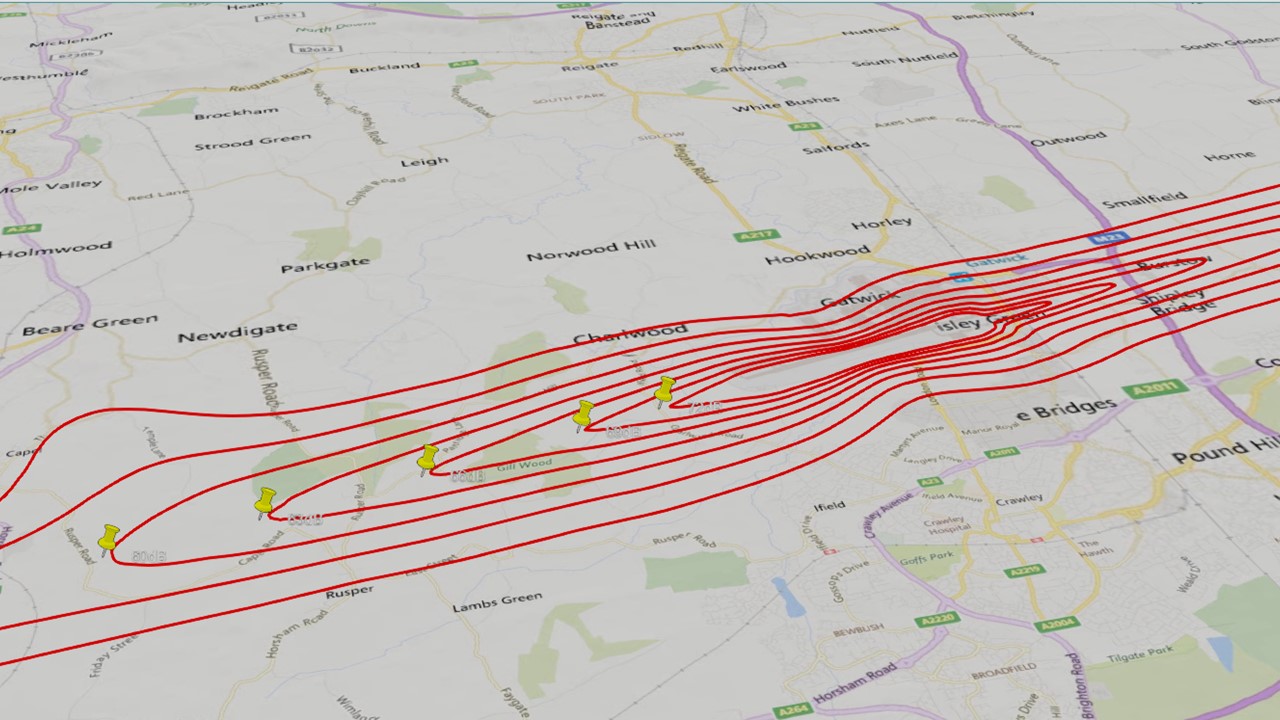
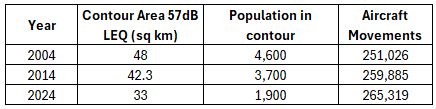
The following map shows how our noise contours (57dB Leq day standard) have varied over the last 20 years. Over that same period, the number of aircraft movements have also changed as follows:


Ground noise

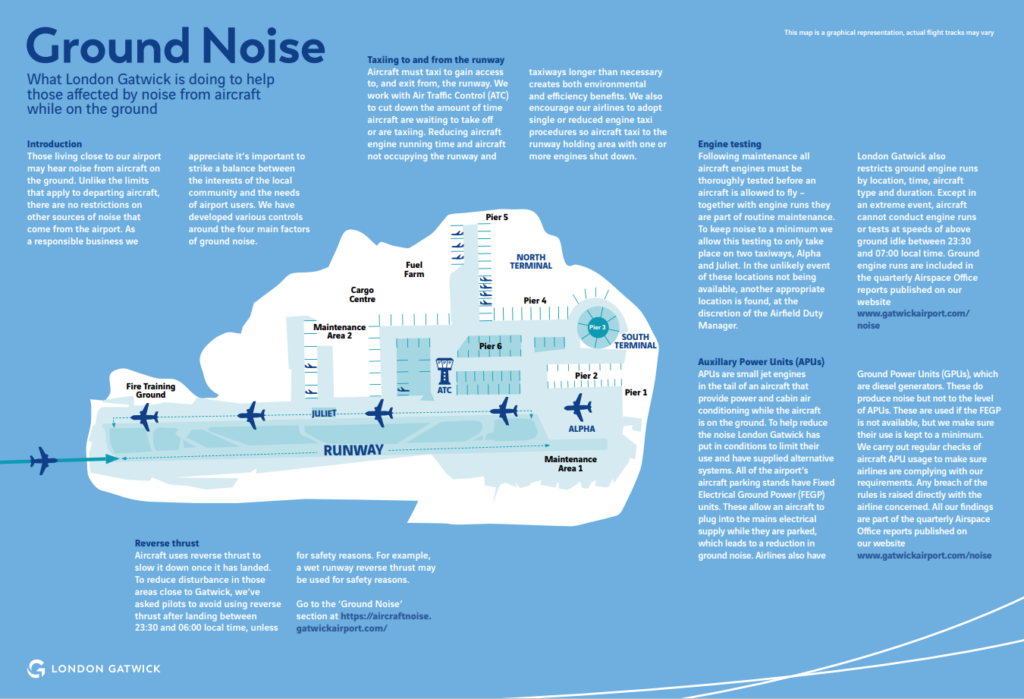
If you live close to the airport, you may hear noise from aircraft operating on the ground, this can occur due to:

  • Aircraft traveling between the runway and stands (their โ€˜parking spaceโ€™).
  • Using reverse thrust to increase braking during landing.
  • Aircraft on their stands with their power units running.
  • Engine testing after maintenance.

At London Gatwick, we work closely with Air Traffic Control, airlines, ground handlers and engineering teams to manage ground noise. In particular at London Gatwick we:

  • Have strict controls on engine testing and has enforced limits for the maximum number of tests that can take place over a rolling 6 month period.
  • Work with Air Traffic Control to cut down the amount of time that aircraft wait to take off, or are taxiing, so that the engines arenโ€™t running for longer than they should be.
  • Work with our airline partners to support the use of single or reduced engine taxi procedures.
  • Provide electrical ground power and air conditioning units to remove the need to keep noisy aircraft auxiliary power units running when on stands.
  • Encourage pilots not to use reverse thrust (a way of slowing aircraft down once they have landed) on landing between 23:00 and 06:00, except in the interests of safety.

Ground noise video:


โ€‹Information pack:

Useful resources, websites and documents

The following websites can be used to find more information on aircraft, noise and airspace:

Department for Transport (DfT)

As a designated airport operator, the Department for Transport (DfT) has direct control over noise policy at London Gatwick and has established over many years a range of operational controls and statutory objectives to manage and where possible reduce noise.

Link: https://www.gov.uk/transport/aviation


Civil Aviation Authority (CAA)

The Civil Aviation Authority (CAA) is the statutory corporation which oversees and regulates all aspects of civil aviation in the United Kingdom. It is a public corporation established by Parliament in 1972 as an independent specialist aviation regulator. One of its four environmental goals is to contribute to a cleaner and quieter aviation industry.

Website: https://www.caa.co.uk/home/

CAA Airspace Change Portal: https://airspacechange.caa.co.uk/


National Air Traffic Services (NATS)

National Air Traffic Services (NATS) provide air traffic services throughout the UK and are responsible for controlling aircraft approaching and departing London Gatwick, as well as aircraft overflying the surrounding area. Which is some of the busiest pieces of airspace in the world.

NATS also provide local air traffic services at London Gatwick, this includes the control of aircraft on the runways and taxiways. Controlling aircraft that have just landed from the runway to the gate, and those taking off from the gate to the runway.

Website: https://www.nats.aero/

Airspace explorer: https://www.nats.aero/ae-home/

Airspace replay: https://www.nats.aero/news/videos-imagery/airspace-plus-videos/